
9. Heroes Fighting Pollution at Military Bases - Superman's Not Coming: Our National Water Emergency and What We the People Can Do About It
By Erin Brockovich
9. HEROES FIGHTING POLLUTION AT MILITARY BASES
Joining the military is both an enormous commitment and a high honor. Our servicemen and -women work to protect our freedoms, maintain peace, and support U.S. policy throughout the world, often in dangerous, intense, and challenging situations. These individuals are held to a high level of self-discipline and maintain a dedication to excellence. Sadly, the agency that oversees these service members has not upheld those same standards. Every day military families write to me about contamination on military bases, and too many of them are suffering from related health issues.
The United States spends more than any other country on its military, and the U.S. Department of Defense (DoD) is one of the worst polluters in the world. Its footprint is bigger than any corporation—with toxins spread across 40 million acres of American soil. The EPA has identified at least 149 current and former military bases with groundwater contamination. More than two-thirds of all Superfund sites are closely connected to the military. The drinking water and soil at these bases has been polluted by a range of dangerous chemicals left over from military activities, including jet fuel, cleaning products, degreasing solvents, firefighting foams, and explosives.
Retired Michigan congressman and veteran John D. Dingell, who died in 2019 at age ninety-two as the longest-serving member of Congress in U.S. history, told Newsweek in 2014, “Almost every military site in this country is seriously contaminated.”
Contamination from these bases, which are scattered throughout the American landscape, ranges from radioactive waste found in McClellan Air Force Base near Sacramento, California, to PFAS found at Wright Patterson Air Force Base near Dayton, Ohio, to PCBs, chemical warfare agents, and radioactive waste found at the former army installation of Fort McClellan near Anniston, Alabama. Just outside Salt Lake City, Utah, sits Hill Air Force Base, which is both a Superfund site and one of the state’s largest employers. The EPA has found more than sixty chemicals in the soil and groundwater, describing the situation as having an “unsafe level of contamination” and saying that there’s “a reasonable expectation that people could be exposed.” These are just a few examples of the extensive contamination that threatens the health of the people who have lived and worked on these bases as well as the nearby communities that people call home.
For our heroes to return from war to discover they themselves, their families, and their children have been exposed to dangerous levels of toxins on their own soil is asking too much. The Department of Veterans Affairs (VA) mission statement is “to fulfill President Lincoln’s promise ‘To care for him who shall have borne the battle, and for his widow, and his orphan’ by serving and honoring the men and women who are America’s Veterans.” I’m a military mom who holds all of them near and dear to my heart. Two of my children served in the U.S. Army, and my son served a tour in Afghanistan. These Americans sacrificed to protect and defend our country, and we need to take care of them. They shouldn’t have to sacrifice their health in the years after their service is complete.
I started getting involved and doing more research into contamination at these sites as more people started contacting me. The DoD and the VA are not required to tell service members or veterans about potential exposure to contaminated water or toxins, with the exception of Camp Lejeune in North Carolina, which I will discuss in depth in the next section. In addition, the Feres Doctrine, an obscure and highly criticized policy stemming from a 1950 Supreme Court ruling states, “The United States is not liable under the Federal Tort Claims Act (FTCA) for injuries to members of the armed forces sustained while on active duty.” The FTCA allows people intentionally or negligently wronged by a government employee to sue the government for their injuries, but the Feres ruling bars active service members from collecting damages when they are injured during their tour of duty, transferring the burden of investigating tort claims against the government from Congress to the court system. Instead, those injuries should be covered by VA benefits. The original Feres case was a collection of three cases, one involving a soldier who had died when his barracks caught on fire due to a defective heating system and two other instances of service members who experienced shoddy surgical procedures. One of the most fiery critics of the Feres Doctrine was staunch conservative Supreme Court justice Antonin Scalia, who died in 2016. In United States v. Johnson, Justice Scalia wrote, “Feres was wrongly decided and heartily deserves the ‘widespread, almost universal criticism’ it has received.” Still, this national policy persists despite dozens of challenges to the ruling throughout the years.
State laws have also been used to protect polluters. A 2014 Supreme Court ruling upheld a North Carolina statute of repose, making it more difficult for plaintiffs to sue companies that pollute communities. Lawsuits must be brought within ten years of the contaminating act, even if residents don’t discover the pollution until after that time, according to the archaic statute. Residents of Asheville, North Carolina, sued CTS Corp., a multinational manufacturer of electronic components, attempting to get the company to clean up pollution from their defunct factory (in business from 1959 to 1983), which had left the groundwater contaminated with dangerously high levels of TCE. The pollution wasn’t discovered until thirteen years after the company closed its doors. The CTS Corp. v. Waldburger case argued that the federal statute of limitations—giving plaintiffs the ability to file suit two years from first discovery—superseded the state law. But the Supreme Court ruled 7–2 in favor of the corporation, upholding the state law rather than the federal one. Such rulings hurt the people who have been most affected by toxins, especially when you consider the latency period from exposure to experiencing symptoms. It played a part in the contamination at Camp Lejeune. In fact, the Department of Justice wrote an amicus brief for the Waldburger case in favor of the polluter, stating, “The United States has a particular interest in the interaction of CERCLA with the North Carolina statute because of ongoing litigation against the United States under the FTCA [Federal Tort Claims Act] involving allegations of contaminated drinking water at the Camp Lejeune Marine Corps Base in North Carolina.” In other words, the U.S. government wanted a favorable outcome in the case so they could use it as a precedent to block the mounting number of lawsuits coming from Camp Lejeune. Under the court’s ruling, people affected by this toxic tap water would have had to file a lawsuit by 1994, despite the fact that most people did not know about the problem until at least 1997.
Science has shown that the latency period for many health problems caused by exposure to these contaminants can take up to thirty years or more. How can someone file a claim against a polluter who has given him or her cancer when they don’t get diagnosed until twenty or thirty years after the exposure? Despite the Supreme Court ruling, Camp Lejeune lawsuits have continued. The text of the law says, “No cause of action shall accrue more than 10 years from the last act or omission of the defendant giving rise to the cause of action.” That omission is where there’s room for legal action, as many have argued that the Marine Corps omitted facts and documents in this case.
In 2017, I spoke at an event on the National Mall for Operation Stand Together, an organization of military veterans and their families who are working to raise awareness about chronic, lifelong illnesses and conditions resulting from contact with toxic exposures during active-duty service. While many people are familiar with the millions of Americans affected by the spraying of Agent Orange, a dangerous herbicide mixture that contained carcinogenic dioxin, during the Vietnam War, most people are unaware of the toxins found on our home soil and in our water. These issues have been swept under the rug for too many years, and the science continues to catch up, showing the real health impacts of exposure to these contaminants. It’s a huge heartbreak.
The DoD has spent more than $11 billion reviewing and cleaning up closed bases, and an estimated $3.5 billion is still needed to continue such efforts, according to a 2017 report from the Government Accountability Office (GAO). Base Realignment and Closure (BRAC) is a process that’s been happening since 1988 to help reduce excess infrastructure; it’s overseen by an independent commission assigned by the president. The commission has closed 120 installations, including ammunitions plants, air force bases, army airfields, naval reserves, and research laboratories. But when these sites close, the contamination remains. Who is responsible for cleaning up this mess? Why has the VA continued to deny the fact that veterans were exposed to toxic chemicals? The current administration has said they want to take care of our veterans and military families. Here is your chance to read more about the people who have been deeply affected by all of this pollution.
CAMP LEJEUNE CONTAMINATION
Born on the Fourth of July, Jerry Ensminger is the picture of a patriot. He grew up on a small, rural farm outside of Hershey, Pennsylvania, and joined the U.S. Marine Corps in 1970, as soon as he finished high school. Jerry spent more than twenty-four years serving his country, retiring in 1994 as a master sergeant. On the drill field, he trained more than two thousand new recruits. He still believes in the Marine Corps motto “Semper fidelis,” a Latin phrase meaning “always faithful.”
Jerry had four children, all born during his military career, but his daughter Janey would change the trajectory of his life. Janey was the only child who was conceived, carried, and born while his family lived at the U.S. Marine Corps Base Camp Lejeune. Located in Jacksonville, North Carolina, it is the largest marine base on the East Coast, supporting a population of more than 100,000 marines, their families, and civilian employees. On a hot Sunday afternoon in July 1983, Janey, who had been dealing with a persistent case of strep throat, developed a high fever. Jerry took her to the hospital. He was not expecting her to come home with a diagnosis of acute lymphocytic leukemia, or ALL, which is the most common type of childhood cancer. Each year in the U.S. about three thousand children are diagnosed with ALL.
Jerry’s life changed dramatically from that day forward as he watched his daughter go through hell. She received treatments from both Penn State and Duke University medical facilities, getting many procedures including chemotherapy treatments, bone marrow extractions, and spinal taps to try to bring her body back to health. She took steroids, which made her gain weight, and she also lost her hair. Kids at school called her “Cabbage Patch Kid,” which made her feel even worse. Jerry said he spent many nights praying to God to take the illness away from his daughter, but those prayers went unanswered. Janey died on September 24, 1985, at the age of nine. Like any parent, Jerry was grief-stricken, but he couldn’t shake the nagging question “Why?” He researched both sides of his and Janey’s mother’s family for a history of childhood leukemia and not one case existed. He didn’t understand how this unspeakable tragedy had hit his family. The American Cancer Society states on its website that most childhood leukemias are not linked to any known genetic causes.
He found an answer in 1997, more than ten years after he lost his daughter. Jerry, who was now retired and living in North Carolina, was making himself dinner while watching the local news when the television reporter said, “The contaminants found in the water at Camp Lejeune have been linked in scientific literature to birth defects and childhood cancers.” Jerry dropped his plate of food and said it felt like someone had just hit him on the head with a two-by-four. The Agency for Toxic Substances and Disease Registry (ATSDR), a federal public health agency, completed a public health assessment (PHA) of drinking water at the base and concluded that the people living and working at the base were exposed to “contaminants of concern” in their drinking water from 1953 through 1987. These chemicals included trichloroethylene (TCE), tetrachloroethylene (PCE), dichloroethylene (DCE), vinyl chloride, and benzene.
He jumped into research mode, searching for more answers and deciding to do everything he could to help other families who might have been affected by the contaminated drinking water. Marines have a tradition of taking care of their own, and he wanted to honor that custom. He couldn’t help but think about the hundreds of thousands of people who had also lived on that base and had drunk that water. They were back home in all parts of the country and didn’t hear the local news report. He bet many of them had the same nagging questions about their health problems as he had about Janey’s. With help from others along the way, including Tom Townsend, a retired marine major, he combed through government databases and web pages and filed Freedom of Information Act (FOIA) requests for military files to find information about the contamination.
Jerry discovered the drinking water well that supplied his water at Camp Lejeune was contaminated with PCE, an industrial solvent used in dry cleaning. Located just steps from the base, a dry-cleaning facility where many marines would drop off their uniforms had been dumping their liquid waste into the ground, eventually polluting the water. The levels of PCE found in the water system near his home during that time were 215 ppb. The levels considered safe today by EPA standards are 5 ppb. But other pollution was happening on the base as well. TCE, a degreaser used to clean machine parts, was regularly dumped into the ground. The toxic sludge permeated through the soil and into wells that supplied water to residents. One of the wells tested as high as 1,000 ppb for TCE, while the current EPA levels are set at 5 ppb. Additionally, during that same time up until spring 1988 underground gasoline tanks leaked about 1,500 gallons of fuel each month, totaling more than a million gallons, which also found its way into the water supply.
As Jerry started contacting representatives at Camp Lejeune and the Navy Environmental Health Center in Norfolk, Virginia, he was surprised by their reaction. He said in a 2012 interview with C-SPAN that many of the people he spoke with acted as if the contamination was not a big deal, saying, “Oh, ATSDR doesn’t know what they’re talking about, these were very minute, trace amounts of these chemicals. You shouldn’t have any reason to believe that this is what caused your daughter’s illness.”
His response was “Well, then why is ATSDR talking about doing a childhood leukemia study?”
He tried to maintain faith and confidence that the Marine Corps he had served for nearly a quarter of a century of his life would do what was right.
“As time went on, I started to realize that not only were they not doing what was right by their people, they were doing everything they could to do what was wrong,” he said. “They were omitting facts. They told many, many half-truths and total lies. I’m polite to a point but whenever I feel that someone is giving me lip service, well then the gloves come off.”
The Marine Corps said that the contamination happened before the days of stringent environmental regulations, notification requirements did not exist back then, and the water quality on the base was comparable to that of municipal water systems during that time. Regardless of their stance, it’s worth noting that the very corporations responsible for creating these chemical compounds knew about the health implications years before the EPA was ever involved in regulating them.
Just as internal scientists at DuPont and Dow Chemical knew about the dangers of PFOA, so did those working with TCE. A letter written by Dr. Carey McCord, a medical advisor for Chrysler Corporation, said, “Promotional activities, seeking the extension of industrial uses of trichloroethylene, frequently fail to disclose the toxic nature of this chemical and the practical dangers that may attend its use. Any manufacturer contemplating the use of trichloroethylene may find in it many desirable qualities. Too, in the absence of closed systems of operations, he may find in this solvent the source of disaster for exposed workmen.” This letter was published in a 1932 issue of the Journal of the American Medical Association.
The list of health issues associated with exposure to TCE and PCE includes everything from infertility to cancer—including a huge cluster of breast cancer in men—to neurobehavioral effects. A cluster of children with leukemia in Woburn, Massachusetts, made famous by the book and movie A Civil Action, has been studied as well. Jerry couldn’t help but draw parallels between this story and his own, as it shows the toll that TCE takes on the human body, especially young people’s bodies.
In 1965 Anne and Charles Anderson moved to Woburn. Their son Jimmy was diagnosed with ALL in January 1972 at 3.5 years old. It was through conversations with neighbors that Anne discovered that two other children down the block had also been diagnosed with leukemia. Jimmy’s doctor had told her that the cause of ALL was unknown, but she suspected otherwise. Woburn had a long history as a center for industrial and chemical production. It was home to leather-tanning factories in the 1850s and chemical factories throughout the twentieth century. For years, she had noticed that the tap water tasted bad and came out in strange colors, and she wondered if any of the chemicals from the town’s past had found their way into the water supply.
At first, her observations and questions about the water were met with skepticism by doctors, local officials, and even her neighbors. No one believed that a connection could be made between the water and the children’s health. In 1979, the local newspaper reported that buried chemical containers had been discovered near the city’s wells, prompting them to be tested. Officials found dangerous levels of TCE and other chemical solvents. The case led to a major lawsuit and garnered a fair amount of media attention. In 1986, researchers from the Harvard School of Public Health published an analysis of the contaminated Woburn wells and their health effects, concluding that there was a link between the drinking water and the children’s leukemia. A 1994 analysis of about seventy-five towns also suggested a connection between TCE/PCE and leukemia, and many studies since then have found similar results.
Even with all this information available, the EPA did not classify TCE as a human carcinogen until September 28, 2011. The agency estimates that 250 million pounds of TCE are either produced or imported into the U.S. each year. The EPA has proposed prohibiting its use in both degreasing applications and as a spot cleaner in dry-cleaning facilities—the first attempt to ban the use of any substance under the TSCA in more than twenty-seven years. We need the right science and policies in place, but they take time. Our agencies are overburdened and underfunded. Why do we allow these chemicals on the market when we don’t know how safe they are? As I’ve explained, our laws give companies free rein to employ these compounds for profit, and years later we discover that they cause health problems.
So many babies born at Camp Lejeune in the ’60s and ’70s died that a nearby cemetery had a section that parents called “Baby Heaven.” Children were born without craniums and with neural tube defects, such as spina bifida and anencephaly (a condition where part of the brain or skull is missing). Many died of leukemia and lymphoma. Any walk around a cemetery is somber but when you see stones that list names with only one year beneath them, the realization hits home of how many young children died there within their first year of life. As I mentioned earlier, my friend Trevor Schaefer, who survived brain cancer at the age of thirteen, believes we need more funding to study how children’s bodies are affected by these toxic chemicals. If a young man can see these correlations, why is it so difficult for our elected leaders?
Camp Lejeune closed most of the contaminated water wells in 1985—that’s five years after they first discovered the pollution. Documents uncovered by Jerry and others suggest that leadership was slow to respond when water tests showed evidence of contamination. The base was declared a Superfund site in 1989, and estimates state that at least 1 million people were exposed to this contaminated water. It took another twenty-four years with help from Congress to inform veterans and their families about the contamination and its health risks.
Jerry has been the face of this case in Washington, D.C., for more than twenty years, pushing for legislation that could help affected military personnel, veterans, their families, and civilians. In fact, his retirement has been overtaken by it. He has made countless trips to D.C., trading his overalls and mud boots for a suit and tie to meet with legislators and testify before Congress.
“I’ve got a very forceful voice and a very forceful personality, so it served me well,” he said. “In many ways the Marine Corps trained me to be doing what I’m doing now.”
Jerry never pursued legal action, even though lawyers approached him years ago, wanting to file a lawsuit for Janey. He said no. “I knew if I got involved in suing the government the people I was working with, who make the laws, would drop me like a damn hot potato. No amount of money can help Janey. But people out there are still suffering the consequences of this shit. These people are losing their homes. They have to make a choice between keeping everything they’ve worked for their entire life or dying. I’ve got to give these people some help.”
Jerry has redefined what it means to be a veteran and an activist. He has found success working directly with legislators and their staff, saying, “It’s one thing to deal with a senator’s staff back in their home state and it’s another thing to sit with an elected member and their immediate staff in Washington, D.C., and look them in the eye.”
On each trip he would try to fit in several visits to congressional offices, so he didn’t waste the entire ride on a five-minute meeting.
“My butt knows every bump on I-95 between exit 49 and Capitol Hill,” he said. “I’ve made that trip that many times. When I started going to Capitol Hill, I didn’t have the money for hotels. I didn’t have the money to stay up there and eat out at restaurants. I would leave my farm at 3:30 a.m. and drive straight through so I would miss rush hour in D.C. I would make my appointments for late in the morning or early afternoon, so I could leave before the end-of-day rush hour would start. Eventually, I got to know people up there that were nice enough to put me up.”
That’s dedication to a cause. That’s knowing your why.
“If you’re going to hold somebody accountable, you better get on your pony and start riding,” he told me about his work.
Jerry has also dealt with his share of naysayers, including retired marines, who thought the water issue was not real.
“I’ve discovered throughout the years that a lot of those naysayers changed their tune when it came and landed on their doorstep,” he said.
Camp Lejeune is considered by scientists and federal investigators to be the worst and largest water contamination our country has ever seen. Janey’s story is just one of many tragedies that came out of Camp Lejeune.
I could write hundreds of these stories, but here are two more—one from a civilian whose mother worked on the base and one from a family member of another marine stationed there.
Rosanne Warren’s mother, Patricia, worked at Camp Lejeune during her pregnancy, according to court documents. Rosanne was born in 1971 and as a child frequently stayed with family friends who lived on the base while her mom was working. At twelve years old, she began having kidney problems, eventually receiving multiple stent implants. By her mid-twenties she was diagnosed with cervical cancer and went through the standard treatments of chemotherapy, radiation, and surgical removal of her uterus. Despite these medical interventions, the cancer returned to her hip and kidney. Rosanne died in 2000 at the age of twenty-eight. Patricia did not find out about the exposure she and her daughter experienced at Camp Lejeune until 2008, when a friend told her about a community meeting to discuss it.
Mike Partain, born and raised at Camp Lejeune, lived in the same housing complex as Jerry and his family. Both his father and grandfather were marines. Mike joined the navy but was later discharged due to a debilitating and unexplained full-body rash. He eventually moved to Florida, got married, and had four children of his own. He was diagnosed with male breast cancer at the age of thirty-nine, despite lacking any genetic markers for the disease. Breast cancer in men is rare, making up less than 1 percent of all cases of the disease. Yet, more than a hundred men who lived or worked at the base during the time of the contamination have been diagnosed with it.
Mike became aware of the toxic water where he grew up when he saw Jerry on the news, testifying at a congressional hearing in 2007. It’s a testament to how one person really can make a difference for so many others. Mike soon joined forces with Jerry, reaching out to him after he saw him on television. He wanted to learn more about the contamination and how he could help, which led to many late nights working determinedly to find other men who had been diagnosed with breast cancer by posting on breast cancer websites and working with local and national media. He also created a timeline of events linked to public records and navy and Marine Corps documents. The timeline became one of the most important weapons in uncovering the truth of what happened at Camp Lejeune.
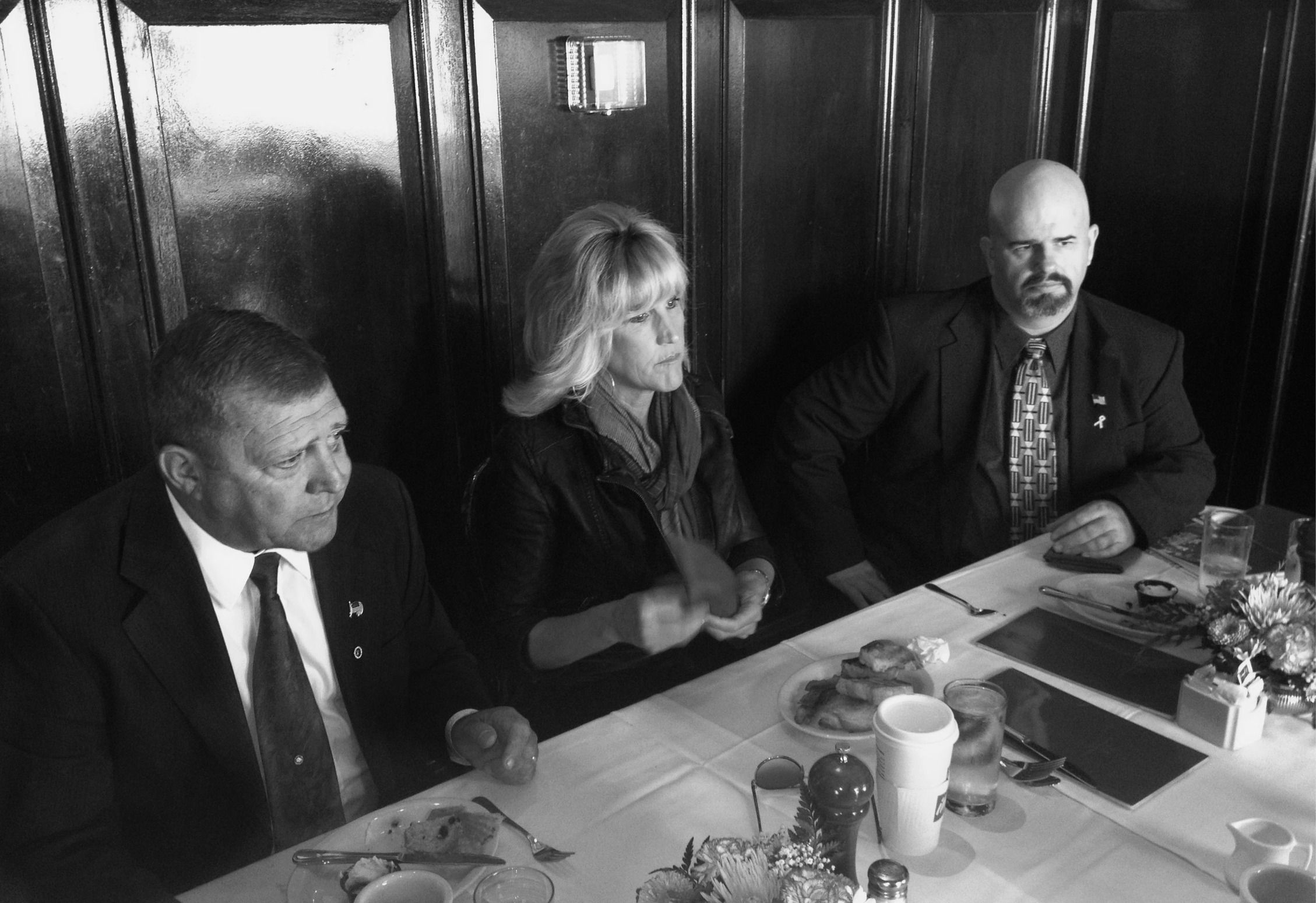
In D.C. with retired marine Jerry Ensminger and cancer survivor Mike Partain, both instrumental in increasing awareness of water pollution issues at Camp Lejeune. Both men were present when President Obama signed the Honoring America’s Veterans and Caring for Camp Lejeune Families Act of 2012 in Washington, D.C.
A CONDENSED TIMELINE OF CAMP LEJEUNE EVENTS FROM 1980 TO 2009 (ORIGINALLY CREATED BY THE ASSOCIATED PRESS)
October 1980: Tests through March 1981 show water at the Hadnot Point treatment plant is “highly contaminated” with chlorinated hydrocarbons. A lab chemist urges further analysis. Officials do not test individual wells to find the contamination source.
May and July 1982: Tests identify TCE and PCE as contaminants in water systems for Hadnot Point and Tarawa Terrace, which served housing, schools, other buildings, and swimming pools at Camp Lejeune.
July 1984: The base begins testing individual wells and by February 1985 shuts down ten contaminated wells. One drinking water sample measured 1,400 parts per billion of TCE. The U.S. government eventually set 5 parts per billion as the maximum safe level for TCE at the tap.
January 1985: A fuel spill closes a clean water system. Homes and a school are connected on an emergency basis to the Hadnot Point system for twelve days. They receive contaminated water.
March through April 1985: A contaminated well that had been shut down is turned on to pump water to residents on four nights to ease a temporary water shortage.
April 1985: The base commander, Maj. Gen. L. H. Buehl, urges families in Tarawa Terrace to conserve water. He says wells were closed as a precaution over “minute” amounts of organic chemicals. He does not mention that contamination exceeded maximum recommended exposure limits several times over.
March 1987: The water treatment system for Tarawa Terrace is shut down and homes are connected to a new water treatment plant.
October 1989: Camp Lejeune is added to the Superfund list of the nation’s highly contaminated hazardous waste sites.
August 1997: The U.S. Agency for Toxic Substances and Disease Registry concludes that adults had little or no increased cancer risk from the past contaminated water but raised concern about effects on developing fetuses. It recommended studies on the fetal effects.
August 1998: The health agency finds a link between toxic water and low-birth-weight babies born to some women at Camp Lejeune during the years of contamination. The study undercounts mothers who were exposed because it assumes a clean treatment plant provided water for four years before it was constructed.
1999: The health agency begins searching for leukemia cases and birth defects among babies who were in utero at the base from 1968, when birth records first were computerized, until 1985, when contaminated wells were believed to have been shut down.
2003: The health agency begins to study whether Camp Lejeune’s contaminated water is linked to birth defects and elevated leukemia rates in its survey of 12,600 children.
October 2004: An outside panel convened by the Marines determines that Camp Lejeune did not understand the significance of its water contamination early on and that Navy environmental advisers were “not aggressive” in assisting them. However, the panel concludes that Marine leadership acted responsibly and provided water quality consistent with general practices at the time.
April 2005: Criminal investigators from the Environmental Protection Agency find no illegal actions or cover-up in Camp Lejeune’s handling of its water contamination. The Justice Department declines to prosecute.
June 2007: House Energy and Commerce Committee hears testimony from what it calls “poisoned patriots,” families who blame their cancers on Camp Lejeune water.
October 2007: The Senate directs the military to find former Camp Lejeune residents and workers and notify them they may have been exposed to contaminated drinking water.
June 2008: The federal health agency concludes it is feasible to do cancer and mortality studies of adults who were exposed to the tainted water. The agency is laying groundwork for the studies while completing its study of fetal health effects.
April 28, 2009: The health agency withdraws its 1997 public health assessment, stating it contains omissions and inaccuracies.
(A new PHA with updated research was released in January 2017.)
Jerry first testified in front of the U.S. House Committee on Energy and Commerce in April of 2004 after The Washington Post wrote an article about Camp Lejeune and the contaminated water. He was invited by Congressman Dingell, the ranking member at that time of the Energy and Commerce Committee, who saw the Post article. The DoD was considering how to get immunity from increased environmental regulations.
In July 2004, North Carolina Republican senator Elizabeth Dole filed an amendment requiring the Marine Corps to notify all former and retired marines and their families, along with all civilian employees, about their possible exposure to the contaminants. By August, she and four other senators introduced a bill requiring the EPA to establish a health advisory for TCE and a National Primary Drinking Water Regulation that would set limits for TCE in public drinking water sources. While these proposed actions didn’t make it past the Senate floor, that didn’t stop Jerry.
But by August 2012, President Barack Obama signed a bipartisan-supported bill called Honoring America’s Veterans and Caring for Camp Lejeune Families Act of 2012 [HR 1627], also called the Janey Ensminger Act. The bill provided hospital care and medical services through the VA for veterans and family members who resided at the base for longer than thirty days between January 1, 1957, and December 31, 1987, for up to fifteen health conditions that scientists have linked to the contamination, including the following:
- Lung cancer
- Breast cancer
- Bladder cancer
- Kidney cancer
- Leukemia
- Esophagus cancer
- Multiple myeloma
- Renal toxicity
- Miscarriage
- Myelodysplastic syndrome
- Female infertility
- Scleroderma
- Hepatic steatosis
- Non-Hodgkin’s lymphoma
- Neurobehavioral effects
The president signed the bill during a ceremony in the Oval Office with Mike and Jerry standing next to him, saying that the bill ended “a decades long struggle for those who served at Camp Lejeune” and that the country had a “moral and sacred duty” to care for those sickened by the toxic drinking water. It was a great first victory, but like many good laws on the books, it was slow to lead to action. Veterans were not automatically provided services, prompting lawsuits by veterans organizations. Some died while waiting for their benefits to be approved.
In 2017, the VA passed a rule granting disability compensation to Camp Lejeune veterans. Veterans who were at Camp Lejeune for at least thirty days during the contamination and who later developed adult leukemia, aplastic anemia, multiple myeloma, non-Hodgkin’s lymphoma, Parkinson’s disease, and bladder, kidney, or liver cancer are eligible. The compensation is estimated to cost the government about $2.2 billion.
Jerry continues to advocate for issues related to Camp Lejeune, including helping civilians who worked on the base and their dependents, along with people who lived near the base who were also affected by the contamination. The Marine Corps has still not admitted fault for what happened at Camp Lejeune, and while thousands of claims have been approved by the VA, many veterans have been denied health care.
“You cannot put your faith in anyone but yourself, because no one is going to be as energized as the people who are directly impacted by these issues,” Jerry told me in a recent conversation.
I’ve opened dozens of further investigations at military bases in Pennsylvania, Alabama, Michigan, Washington State, New York, Florida, Vermont, New Hampshire, and West Virginia, and continue to work with groups like Poisoned Veterans, Operation Stand Together, and the Veterans & Civilians Clean Water Alliance to help raise awareness and help veterans and service members get the help and services they deserve.
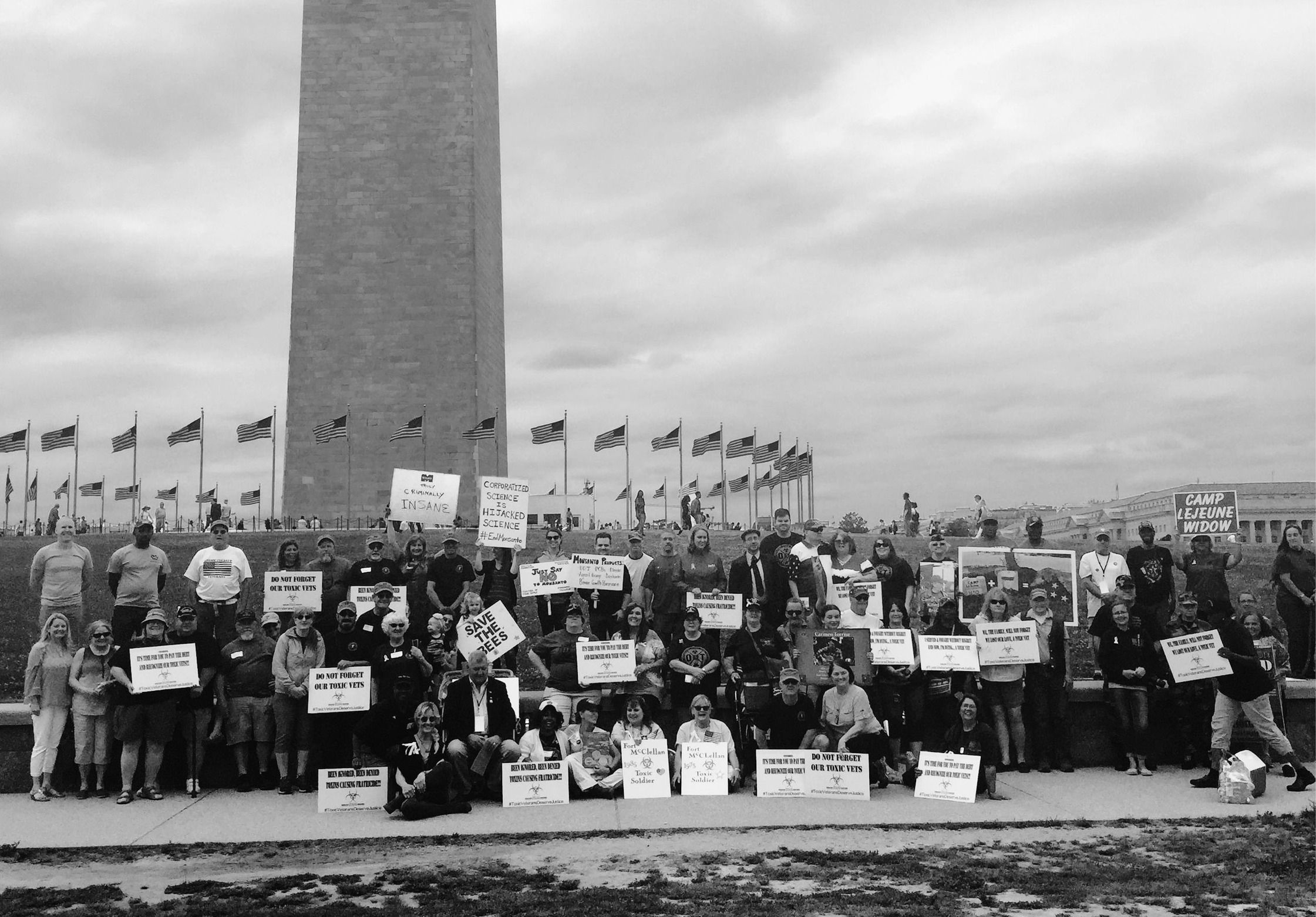
With veterans—among them Jerry Ensminger—in D.C. in 2017 bringing attention to toxic drinking water at U.S. military bases
“The American people need to wake up,” Jerry said to me. “We have a beautiful country and it’s still salvageable. We can save our environment. We can save it for future generations and stop all this cancer. But we need to wake up and we need to live lives in accordance with our environment or we are all doomed.”
I’m grateful for his service both in the Marine Corps and all these years after.
PFAS CRISIS
The fear of drinking water contaminated with perfluorinated chemicals (often referred to as PFCs or PFAS), particularly PFOA and PFOS, has been building as more research has been amassed about how these substances impact the body at toxic levels. The manufacturers of these chemicals, such as Arkema, DuPont, and 3M, knew about the dangers associated with them and failed to warn those who would come in contact with them. I’ve already discussed how DuPont knew about the risks with PFOA. Multiple studies dating back to the 1970s found health risks associated with PFOS, which was a chemical used from the ’70s on, in firefighting foams used to help put out aircraft fires at military bases throughout the country. Despite a deal made with the EPA and the foam’s main manufacturer to cease making it more than eighteen years ago, the air force and many other military installations continued using it.
As I was writing this book more news broke about the dangers of these chemicals. In May 2018, White House officials were caught suppressing the publication of a new ATSDR health study, calling it a “public relations nightmare.” The study shows how PFOA- and PFOS-contaminated water at military bases and neighboring communities nationwide has reached unsafe levels, posing risks to human health at a lower level than what the EPA currently considers safe. The Union of Concerned Scientists reported that the research suggests that the health advisory should be set at 12 ppt for certain populations.
“The public, media, and Congressional reaction to these numbers is going to be huge,” one unidentified White House aide said in an email published in a Politico piece. “The impact to EPA and [the Defense Department] is going to be extremely painful. We [DoD and EPA] cannot seem to get ATSDR to realize the potential public relations nightmare this is going to be.”
The EPA estimates that both these chemicals resist most conventional water treatment and require more robust systems, such as granular activated carbon and ion exchange resins, so it’s particularly problematic when they make their way into the drinking water supply.
“It is unacceptable and irresponsible that the release of this study has been blocked for five months out of fear that it would create a ‘potential public relations nightmare,’ ” U.S. Senator Maggie Hassan from New Hampshire said in a statement. “Families who have been exposed to emerging contaminants deserve to know about any potential health impacts that the contaminants may involve, and it is completely unacceptable that your agencies are withholding science-based information and failing to provide details to these families.”
Congressman Dan Kildee also called on the Trump administration to release the study, which affects his district, including the groundwater around Oscoda and the former Wurtsmith Air Force Base in Iosco County, Michigan, and communities across the country. Groundwater in western Michigan contains PFOA and PFOS concentrations up to 37,800 ppt or more than five hundred times the EPA’s current health advisory of 70 ppt. PFOA and PFOS have also been found throughout Michigan’s bodies of water including the Flint River, Kalamazoo River, and Saginaw River, and in parts of Lake Michigan, Lake Huron, and Lake Erie. He has continued to urge the administration to address PFOA and PFOS contamination, by working to include language authorizing a health study in the National Defense Authorization Act, which became law in December 2017. Federal lawmakers approved a budget in 2018 providing $10 million to fund this nationwide health study to further understand the impact of PFAS compounds on the human body and added more than $85 million to the air force and the navy budgets to specifically address this contamination.
In New Mexico, these chemicals have contaminated groundwater near Cannon Air Force Base and Holloman Air Force Base, including agricultural wells, at a cost to the local dairy industry. Senators from the state are also calling for the EPA to develop federal drinking water standards for PFOA and PFOS. In the absence of national standards, states have created their own drinking water regulations—and the lack of coordination among states has created a patchwork of conflicting guidelines and various MCLs. Communities continue to question if their regulations are sufficient.
In a bipartisan letter to acting EPA administrator Andrew Wheeler, New Mexico senators Tom Udall and Martin Heinrich wrote, “Without enforceable drinking water standards for PFOA and PFOS, it is doubtful that a national management strategy will sufficiently confront the challenges PFAS chemicals pose to states and affected communities. This decision would also fail to consider ongoing interagency efforts to determine the human health implications of contamination from PFAS, including the nationwide study being conducted by the Agency for Toxic Substances and Disease Registry (ATSDR).”
In Newburgh, New York, a small city perched next to the Hudson River, the drinking water tested positive for these same chemicals. Researchers from the New York Department of Environmental Conservation identified nearby Stewart Air National Guard Base as the source of the PFOS, suspecting that PFOS leaked into a stream leading to the city reservoir.
Newburgh has twenty-nine thousand residents and is just one of many places across the country affected by the EPA’s update to its health advisory of PFOA and PFOS. In 2014, the chemicals were detected at 170 ppt there, but when the EPA set a new health advisory of 70 ppt in 2016, the city declared an emergency. Because of the elevated levels of PFOS found in Washington Lake and Silver Stream, the city of Newburgh announced on May 2, 2016, it would stop using the drinking water and would connect to a different water source. I rarely get the opportunity to congratulate Safe Drinking Water Act administrators, but when they do it right, I enjoy saying it. The city has since been testing a new water filtration system designed to eliminate PFOS from the city’s water source and has launched a free health screening program offering blood testing to residents. But Newburgh has a long road ahead when it comes to cleaning the reservoir and providing medical services to residents exposed to the contaminated water.
Meanwhile, the military has been investigating about 400 sites for water contamination of PFOS and PFOA. A March 2018 report from the House Armed Services Committee showed that 126 sites, either on-base or off-base, have drinking water or groundwater testing above the EPA’s standard for PFOS and PFOA, including 25 army bases, 50 air force bases, 49 navy or Marine Corps bases and two Defense Logistics Agency sites. In addition, the DoD tested another 2,688 groundwater wells on and nearby base communities and found that about 61 percent of them tested above EPA recommended levels. These chemical compounds have been linked to cancer and other health issues such as ulcerative colitis and low birth weights. While the military is also working to develop a replacement substance, the damage from years of exposure to this chemical has already been done.
Residents of Portsmouth, New Hampshire, home to the former Pease Air Force Base, another abandoned military outpost, are dealing with this mess as well. You would need an old map of the city to recognize the base as it is now home to bright brick apartment buildings, trendy restaurants, offices, and daycare centers. When the base closed in 1991, the state of New Hampshire wrote a redevelopment plan to create a state-of-the-art business park, even though the area had been called “one of the most contaminated sites in New England” and declared a Superfund site in 1990. It was the first (former) military base in the country to discover PFAS in the local drinking water.
In 2014, Andrea Amico learned from a newspaper article about the drinking water in her community and how it was highly contaminated with these toxic substances. As has happened to so many other community members I’ve worked with, state officials did not respond to her calls or emails asking questions about how the water could affect the health of her family. So she started her own campaign to raise awareness and get blood tests provided to everyone exposed to the toxic water. Along with residents Michelle Dalton and Alayna Davis, they started Testing for Pease, a community activist group whose mission is to be a reliable resource for education and communication while advocating for a long-term health plan on behalf of those impacted by the water contamination at the former Pease Air Force Base.
The women learned from communities like Hoosick Falls, New York, less than two hundred miles away, not to wait for those in charge to take action. Officials there waited more than a year to warn residents about the tainted drinking water and even longer to test blood levels of locals. While the water in Hoosick Falls was tainted by PFOA from industry rather than the military, the contamination was not announced as part of a federal testing program. One concerned citizen—Michael Hickey, whose father worked at the local plastics plant and died of kidney cancer in 2013—paid out of his own pocket for water tests, which detected PFOA at levels well above the EPA’s health advisory. Just like in Flint (and so many other towns), local authorities downplayed the threat, but Hickey and other community members kept making noise.
In December 2015, the EPA finally issued a warning to residents not to drink or cook with the water. By June of 2016 residents of Hoosick Falls stormed the state capitol, demanding answers, bio-monitoring for their health problems, and cleanup. Children, moms, and grandparents marched with signs and their blood contamination levels scrawled on their bodies. With a PFOA blood level of 51.5, more than twenty-five times the national average, Hailey Bussey carried a handwritten letter asking Governor Andrew Cuomo why the administration “left us to die like sick kittens.” Hailey was ten years old at the time.
Why does it take federal, state, and local governments such a long time to warn people about the dangerous toxic chemicals in their water? A nationwide EPA program samples water for unregulated contaminants and found PFOA in more than one hundred public water systems in twenty-seven states. In the case of Hoosick Falls, the town was skipped because their water supply serves fewer than ten thousand people. This town and many others are not big enough and likely don’t have the resources to perform the tests. The fight for clean water continues there and in many other towns across the country.
In Portsmouth, three drinking water wells tested positive for PFCs. One in particular tested at levels more than twelve times above the EPA provisional health advisory, and that well was closed. After a community meeting in May 2014, Andrea felt as if local officials were not taking the problem seriously, so she turned to her local newspaper, the Portsmouth Herald, to cover the story.
“That article ran and that was the catalyst that brought all this to a head,” Andrea said in a local article. “But to look back now and see how far we’ve come it truly amazes me and it gives me a big sense of pride in how far we’ve come.”
Since then, two city officials, city councilor Stefany Shaheen and assistant mayor Jim Splaine, along with the state have agreed to test anyone exposed to the contaminants—after Andrea and others lobbied for almost two years for blood testing. Almost 1,500 people were initially tested, and results showed the blood levels of PFCs of people exposed to the city’s tainted water were higher than national averages. The air force began a water quality sampling program to monitor the other wells and surrounding areas of Pease. The city began piloting activated carbon and resin treatment systems in October 2017 on those wells.
The air force also denied community requests to conduct a health study on the residents affected by the contamination at Pease in 2017, but by 2018 ATSDR announced it would include the town in their first-ever multi-site health study on PFAS exposure. New Hampshire senator Jeanne Shaheen worked with locals and helped to write the legislation that made the study possible. The study will take years to complete and create a full picture of the impact to this city and its people, but it is a step in the right direction.
Portsmouth resident Lindsey Carmichael got involved with the local water issues after learning her son had been exposed to the contaminated water at his daycare. She became a member of Pease’s Community Assistance Panel, a group of citizens who work with federal agencies to look at health effects on the community.
“All of us are guinea pigs and we bear the burden of proving a product or chemical’s safety—or lack thereof—and the consequences are what we’re seeing here,” she said in an article.

Working with community members in Michigan in late 2017, raising awareness about PFOS. Note their T-shirts!
MILITARY CONTAMINANTS OF CONCERN
Below is a partial list and brief “official” statements about the conditions at these facilities from a Facebook post I wrote in 2015. Hundreds of other bases, forts, munitions stations, annexes, depots, centers, and unnamed facilities are also dealing with pollution issues.
U.S. ARMY
Aberdeen Proving Ground, MD
Essentially every land portion in the Edgewood, Maryland, area (on which a portion of the base is located) is contaminated or potentially contaminated. Monitoring in 1977–78 indicated contamination of surface and ground water. Four standby wells were shut down in 1983 due to detected organic compounds. The base’s active drinking water supplies come from two off-post sources, Deer Creek and Winters Run, which are unaffected by the contamination on the base.
Fort A. P. Hill, VA
Three problems exist here: (1) An herbicide contaminated the soil near an old pesticide storage building and the soil has been placed in sealed drums. (2) Herbicide- and dioxin-contaminated soil and debris are stored at a base warehouse in 33-gallon drums inside sealed 55-gallon drums. A study will be done to recommend an environmentally sound method of permanent disposal. (3) The base plans to remove some 70 tons of soil contaminated by DDT. The base water comes from a deep aquifer and is not contaminated, the army says.
Fort Belvoir, VA
Several contaminants—benzene, trichloroethylene, chloroform, toluene, ethylbenzene, and 1,2-dichloroethane—have seeped from the Building 324 tank farm into an unnamed creek. None of these contaminants were detected in surface water at the installation boundary, and no health hazard is apparent, the army says. Post drinking water comes from the Fairfax County Water Authority.
Fort Devens, MA
A sanitary landfill that is a potential source of contamination is being closed. It was used as an open burning site, then for incineration of waste and burial of residues. Water quality meets state standards.
Fort Dix, NJ
Nine potentially contaminated sites are known. One, the sanitary landfill, was placed on the National Priority List (Superfund) due to the presence of organic solvents. However, the army says no significant health hazards have been identified. To avoid any risk, the landfill may be capped with clean soil and planted with grass. The other eight sites were identified only recently. Organic solvents and/or petroleum products were located at an old magazine area, a tank farm, a fire station, the golf course, a motor pool, a firing range, a pesticide storage building, and a National Guard facility. Investigation is under way to determine any problems. The sites do not endanger the base water supply, according to the army.
Fort Lewis, WA
There are two problems. One is Landfill No. 5. Plans call for a landfill liner and leachate collection to preclude groundwater contamination. There are also plans for a refuse-fired incinerator to reduce reliance on the landfill. Also, TCE has been found in the groundwater beneath the Logistics Center. Post drinking water comes from a spring unrelated to that aquifer.
Fort McClellan, AL
Ten old training areas and three former disposal sites have a slight chance of subsurface contamination from mustard agent and its breakdown products and possible byproducts of chemical agent decontamination. Only very small quantities of the agent were used, and all sites have been closed, decontaminated, and fenced. No evidence of any surface or surface water contamination has been found in the past, the army says. The post receives its water from the city of Anniston.
Redstone Arsenal, AL
A $30 million cleanup was recently completed by Olin Corporation, which made DDT in a leased factory that was closed in 1970 for environmental reasons. Manufacturing waste was contaminating soils and streams. DDT was found in the wildlife food chain but not in potable water supplies inside or outside the base. In addition, the presence of PCBs, heavy metals, and other organic compounds is known or suspected. An investigation is under way to determine if they contaminated the active sanitary landfill, a DDT waste landfill, open burning and detonation grounds, and twenty-two old disposal sites. Also, a $5 million program is in progress to remove all asbestos from post buildings.
U.S. NAVY
Brunswick NAS, ME
A study is under way to determine contaminants and their migration habits.
Lakehurst Naval Air Engineering Center, NJ
Soil and shallow groundwater at the tetraethyl lead disposal site are contaminated, perhaps from aviation fuel. The groundwater in some areas is covered with a six-inch layer of JP-8 jet fuel. Elsewhere, the carcinogen nitronomine may be present. Waste oils, battery acid, and solvents are suspected of having been discharged into some dry wells. The soil stabilization field test received 362 gallons of aniline and 161 of furfural (toxic by ingestion, inhalation, or skin absorption) and ferric choride solution; personnel and animals that come in contact with the soil may be endangered. A landfill received thousands of gallons of hydraulic fluids, five tons of asbestos, and also cutting oils, solvents, sludge, and heavy metals. A site for PCB testing and storage is near the environmentally sensitive Ridgeway Branch. The western portion of the base may be contaminated by ordnance: shells, gas-loaded projectiles, phosgene, phosphorus, mustard agent, explosives, flares, and depth bombs. The shallow aquifer in this area may also be contaminated.
Moffett Field NAS, CA
The major contaminants in the groundwater are volatile organic compounds.
Whidbey Island NAS, WA
The groundwater could be contaminated. Waste oil, solvents, fuel, and caustic rinse water containing heavy metals have been discharged through the storm sewer system and into Dugella Bay. Waterfowl and fish that feed or live in the drainage area may be affected. Subsurface migration at the seaplane base may have affected fish or shellfish in Oak and Crescent Harbors. A backup well at Ault Field is threatened by potential migration of contaminants.
Other Contaminated Navy Bases:
- China Lake, CA
- Indian Head NOS, MD
- Jacksonville NAS, FL
- Miramar NAS, CA
- Pabmont River NAS, MD
- Roosevelt Roads NS, Puerto Rico
U.S. AIR FORCE
Castle AFB, CA
On-base drinking water supply has been contaminated with TCE. Work is under way to install a new well drawing from a deeper, uncontaminated aquifer.
Dover AFB, DE
Ground on the base is contaminated with arsenic and other metals, and a stream on the base is contaminated with TCE. The base well, however, is free of these contaminants. Remedial action has been under way since 1985.
Griffiss AFB, NY
Phenols, ethyl benzene, and benzene have been detected in groundwater on the base, and toluene in surface water on the base.
Hill AFB, UT
Seepage water near two disposal areas contains toxic organic chemicals, such as trichloroethylene (TCE), 1,2-dichloroethane, and 1,1,1-trichloroethane. None of the affected water is used for human consumption. Remedial action to date includes construction of a slurry wall and landfill covers as well as pumping and treating contaminated groundwater.
Mather AFB, CA
Water in thirty-six homes was affected by TCE contamination of a well on-base. A new permanent water supply is to be provided to these homes.
McChord AFB, WA
Various chemicals—methylene chloride, chloroform, benzene, arsenic, chromium, and mercury—have been detected in test wells and in surface drainage leaving the base. One site is a liquid waste spill next to the wash rack and industrial waste treatment system. Contracted work for the American Lake Gardens Water Supply Project began in 1985; a contractor installed shallow wells and one deep well.
McClellan AFB, CA
An estimated 160 sites have been identified. Contaminants include organic compounds, such as TCE, methylene chloride, and 1,1-dichloroethylene. Wells both on and off the base that had contaminants exceeding government standards have been shut down. McClellan is considered a leader in cleanup efforts. Completed projects include alternate water supply for off-base residents and a groundwater containment system and treatment plant.
Norton AFB, CA
TCE was detected in concentrations exceeding state drinking water standards. All base wells were contaminated to various degrees with silver and PCE. Closure of a lagoon and sludge removal was begun several years ago.
Robins AFB, GA
Contaminants include halogenated solvents, heavy metals, pesticides (DDT, chordane, etc.), cyanide, and oil products. The toxic organic compounds TCE and PCE have been detected in groundwater on-base. Groundwater is not used as drinking water, but the contaminants could eventually appear in surface water.
Tinker AFB, OK
Some base wells were closed due to contamination from chlorinated solvents. Chlorinated solvents were also detected in the aquifer that is the primary water source in the region. Organic compounds have been detected at all sites, though migration is limited. Remedial action, begun in 1984, includes capping Landfill No. 6, and stopping leaks from underground storage tanks at the fuel farm.
Wright-Patterson AFB, Ohio
Fourteen organic compounds, including TCE and PCE in relatively high quantities, have been found in wells serving the base. Nearly half the seventeen wells have been shut down due to contamination or age. An air stripper, a technology in which volatile organic compounds are transferred from extracted water to air, has been put on two wells to remove the organics, and installation of two other strippers is planned.
Other Contaminated Air Force Bases:
- Beale AFB, CA
- Chanute AFB, IL
- Charleston AFB, SC
- Columbus AFB, MS
- Edwards AFB, CA
- England AFB, LA
- F. E. Warren AFB, WY
- George AFB, CA
- Hanscom AFB, MA
- Hickam AFB, HI
- Kelly AFB, TX
- Kirtland AFB, NM
- Langley AFB, VA
- Lowery AFB, CO
- Luke AFB, AZ
- MacDill AFB, FL
- McGuire AFB, NJ
- Moody AFB, GA
- Mountain Home AFB, ID
- Otis Air National Guard Base, MA
- Pease AFB, NH
- Plattsburgh AFB, NY
- Pope AFB, NC
- Reese AFB, TX
- Seymour Johnson AFB, NC
- Shemya AFB (now Eareckson Air Station), AK
- Travis AFB, CA
- Vandenburg AFB, CA
- Wurtsmith AFB, MI
ACTION STEPS
Contacting Media 101
Working with the media can be an important step to help educate the public and have your message reach a larger audience. You can pitch stories about your cause to media outlets or offer to be a source for stories, meaning they will interview you about your experience. The best way to start is by contacting local media agencies such as local papers, blogs, or television stations. These local stories often get picked up by larger news outlets.
Ingredients for a Successful Media Pitch
Traditionally, one way to get more media attention for a cause is to write a press release. A press release is an official announcement regarding something new or noteworthy about you, your group, or an event. It should answer the who, what, why, where, when, and how of your story. These days, it usually takes the form of email, but the same principles apply. If you are working with a group of people in your community, find the person with the best writing skills to take on this task.
Start with a captivating headline or email subject. Reporters and editors get hundreds of emails a day, and you want to catch their attention. One way to do this is to think outside the box. Don’t be afraid to put your most important point first or to make a powerful statement, as long as it is factual. Don’t shy away from the personal: tell your story, as journalists appreciate a personal angle that can represent an issue, especially when it’s a complex case such as water contamination. Be sure to include any national statistics that might be relevant as these facts will help those covering the story to understand the larger impact. Be sure to define and spell out key terms that might not be familiar, such as chemical names.
Keep these questions in mind as you write:
What’s the story?
Why should we care?
Why is it relevant now?
Here’s a template for a press release or pitch:
- Headline/Email subject line
- Opening sentence
- Body (What’s the story, why does it matter?)
- Any other previous news coverage (with links)
- Contact information
Don’t forget that it’s a real person you are reaching out to so always be respectful of them and their time. It’s also okay to send a follow-up email or two, if you don’t hear back from them on the first outreach.
Additional Camp Lejeune Resources
If you are a veteran, and have concerns about your health, you can find out more information here:
Department of Veterans Affairs (VA): www.publichealth.va.gov/exposures/camp-lejeune
ATSDR: www.atsdr.cdc.gov/sites/lejeune/index.html
The Few, the Proud, the Forgotten: www.tftptf.com/5801.html
Semper Fi: Always Faithful (documentary film): semperfialwaysfaithful.com
A Trust Betrayed: The Untold Story of Camp Lejeune and the Poisoning of Generations of Marines and Their Families by Mike Magner (Da Capo Press, 2014)
Poisoned Nation: Pollution, Greed, and the Rise of Deadly Epidemics by Loretta Schwartz-Nobel (St. Martin’s Press, 2007)